How to Choose the Best Portable Carbon Filter for Your Needs?
Choosing the right portable carbon filter can be challenging. With many options on the market, making the best choice is vital for your health and lifestyle. Dr. Emma Carter, an expert in air quality solutions, states, “Finding a suitable portable carbon filter is about knowing your specific needs.” This highlights the importance of personal requirements in selecting a product.
Portable carbon filters are essential tools for enhancing air quality, especially in urban environments. They help remove pollutants, allergens, and unpleasant odors. However, they are not all created equal. Many consumers overlook key factors like filter efficiency and size. These details can significantly impact the filter's overall performance.
Investing in a portable carbon filter requires careful consideration. Evaluate where you will use it. Understand the type of contaminants you face regularly. Do the features align with your expectations? Mistakes in this process can lead to dissatisfaction. Pursuing the right filter is not merely about eliminating odors; it involves ensuring a healthy atmosphere in your space.

Understanding Portable Carbon Filters and Their Functionality
Portable carbon filters are essential tools for improving air and water quality. They utilize activated carbon to remove impurities, odors, and harmful substances effectively. These filters are common in various settings, such as homes, offices, and travel situations, where high air and water quality is a priority. According to the World Health Organization, contaminated air can lead to serious health issues, reinforcing the need for effective filtration systems.
When choosing a portable carbon filter, consider its specific functionalities. Some filters excel in removing volatile organic compounds (VOCs), while others target chlorine and heavy metals more effectively. The effectiveness can vary significantly. Research indicates that filters with higher activated carbon content often provide better purification results. Look for products that list their filtration capabilities and certifications, ensuring reliable performance.
Tip: Regularly check and replace the carbon filter according to the manufacturer’s instructions. Filters can become saturated and lose effectiveness over time.
Another important aspect is size and portability. Consider how often you will use the filter and where you will take it. Some models are lightweight and compact, ideal for travel, while others are bulkier but offer higher filtration capacity.
Tip: Balance portability with capacity for your specific needs to avoid inconvenience.
Comparison of Portable Carbon Filter Features
Factors to Consider When Selecting a Portable Carbon Filter
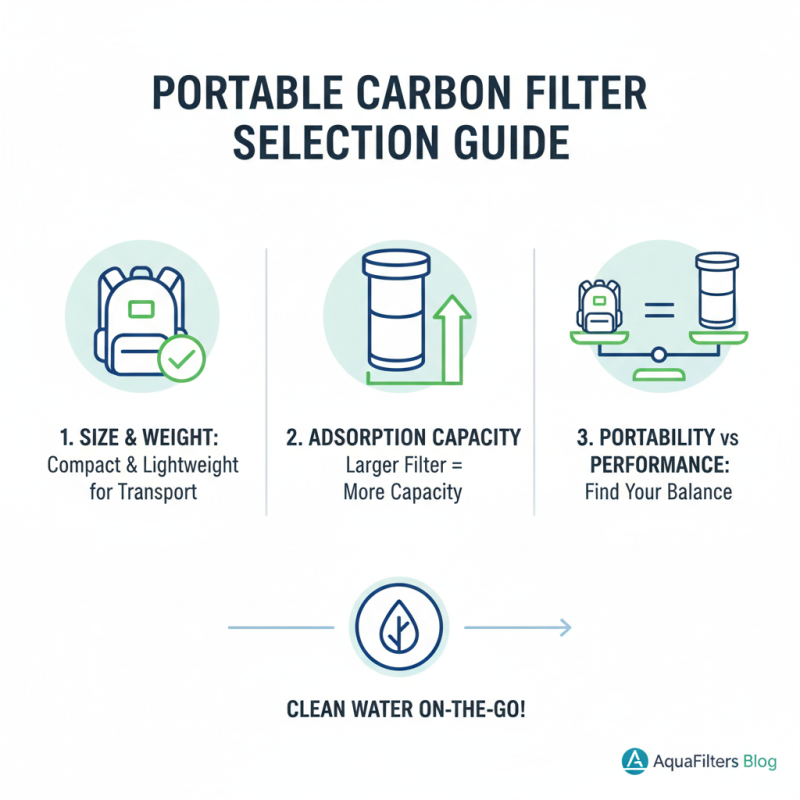
Choosing the right portable carbon filter requires careful consideration of several key factors. The filter's size and weight are crucial. It should be lightweight and compact for easy transport. However, a larger filter may offer more adsorption capacity. Strike a balance between portability and performance to meet your needs.
Another important factor is the filter's lifespan. Some filters require frequent replacement, which can be costly. Look for filters that offer a longer service life without sacrificing effectiveness. Understand how the filter works and what contaminants it targets. This knowledge can help ensure you select a filter appropriate for your specific environment.
Finally, consider user reviews and expert recommendations. This information can shed light on the filter's performance and reliability. Be cautious, though, as not all reviews reflect true performance. Engage with communities or forums focused on portable filters for deeper insights. Everyone's experience might be different, and reflecting on those differences can guide you in making a more informed choice.
Types of Portable Carbon Filters and Their Suitability
When selecting a portable carbon filter, understanding the types available is crucial. There are two main categories: activated carbon filters and charcoal-based systems.
Activated carbon filters excel at removing impurities from air and water, making them versatile for various needs. According to a 2022 market analysis, activated carbon efficiently captures up to 99% of certain volatile organic compounds. This makes them suitable for both outdoor and indoor use, perfect for camping or home filtration.
Charcoal-based filters, on the other hand, often serve specific purposes. They are ideal for food preservation and air freshening. Recent studies have indicated that these filters can absorb odors effectively, maintaining freshness in stored items. However, they may not remove all chemicals in water. Users must weigh these factors when choosing a filter. Reflecting on your needs is vital to ensure you select the right type. Portable systems can greatly enhance your health and comfort but might require more frequent replacements than some expect.
Evaluating Filter Performance: GAC, RPC, and Other Technologies
When selecting a portable carbon filter, evaluating filter performance is crucial. Two primary technologies used are granular activated carbon (GAC) and highly porous, restructured carbon (RPC). GAC filters are known for their ability to remove common contaminants effectively. They provide a large surface area for trapping chemicals. However, GAC filters may require frequent replacement to maintain efficiency.
RPC technology represents a more advanced option. This type is engineered to enhance adsorption capabilities. It can capture smaller particles that GAC may miss. Additionally, RPC filters often have a longer lifespan. Users should consider that the best option may vary based on specific needs. For example, someone in a heavily polluted area might lean towards RPC for its superior filtration. Yet, GAC could suffice for light household use.
It's important to reflect on the specific contaminants you want to target. Not all filters suit every purpose. A classic mistake is assuming all carbon filters operate the same. Price differences can mislead consumers about performance. Always check the specifications and effectiveness ratings. In some cases, the most expensive option doesn't guarantee the best protection.
How to Choose the Best Portable Carbon Filter for Your Needs? - Evaluating Filter Performance: GAC, RPC, and Other Technologies
| Filter Type |
Material |
Contaminants Removed |
Flow Rate (L/min) |
Lifespan (Months) |
Cost Range ($) |
| GAC (Granular Activated Carbon) |
Activated Carbon |
Chlorine, VOCs, Odors |
1-3 |
6-12 |
20-50 |
| RPC (Resin-Polishing Carbon) |
Mixed Resin |
Heavy Metals, Organics |
1-4 |
12-18 |
30-70 |
| CTO (Chlorine, Taste & Odor) |
Carbon Block |
Chlorine, Sediment, Odors |
0.5-2 |
6-12 |
15-40 |
| UF (Ultrafiltration) |
Membrane Filter |
Bacteria, Protozoa, Viruses |
2-5 |
24-36 |
50-150 |
| RO (Reverse Osmosis) |
Membrane Filter |
Salts, Heavy Metals, Fluoride |
0.5-2 |
24-36 |
100-300 |
Maintenance and Care Tips for Extending Filter Life
When investing in a portable carbon filter, proper maintenance is key to ensuring longevity and effectiveness. The lifespan of these filters significantly varies, with some studies indicating that they can last between 6 to 12 months under normal usage. It's essential to observe the manufacturer's guidelines for replacement. A common error users make is neglecting regular checks on the filters. By monitoring their condition, users can avoid diminished performance, which usually occurs due to saturation of contaminants.
Cleaning the pre-filters regularly is another crucial aspect of maintenance. A clean pre-filter can capture larger particles, which helps prolong the life of the carbon filter itself. Washable pre-filters can be rinsed and reused, contributing to both filter efficiency and cost savings. Research shows that up to 30% of filter efficiency can be lost due to blocked pre-filters. Ignoring this step can lead to a cycle of replacing filters more often, reflecting a lack of preventative care.
Lastly, storing filters in a dry, cool place is vital. Humidity can degrade carbon quality, leading to reduced adsorption capacity. An industry report suggested that temperature fluctuations could shorten filter life by 15%-20%. Users often overlook storage conditions, which can result in wasted resources. Incorporating these care tips into your routine can significantly extend the lifespan of your filter while maximizing its effectiveness.