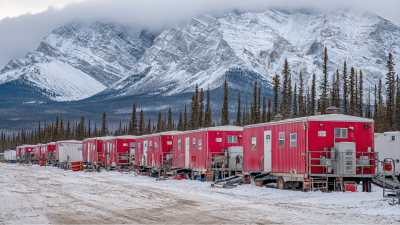
Choosing the best China Man Camp Housing supplier requires more than comparing online prices. A reliable decision begins with field realities: worker capacity, climate, transport distance, installation access, and daily maintenance. A camp may look impressive in photographs yet perform poorly in harsh wind, heavy rain, or freezing temperatures. Details matter.
Tom Hardiman, Executive Director of the Modular Building Institute, has emphasized, “Quality modular construction depends on disciplined planning, precise execution, and continuous communication.” This principle applies directly to Man Camp Housing projects. Buyers should examine structural calculations, fire-resistant materials, insulation performance, plumbing layouts, electrical protection, and sanitation systems. They should also request factory photographs, inspection records, project references, and clear warranty terms. Ask difficult questions.
The strongest China supplier is not always the cheapest one. A low quotation may exclude engineering changes, inland delivery, customs support, spare parts, or on-site supervision. Those missing costs can become expensive later. Supplier experience with international projects also deserves careful review. Can the company provide technical drawings in English? Does it understand local building requirements? Can it replace damaged panels quickly?
There is no perfect supplier. Even experienced manufacturers can overlook a small detail. A door swing, drainage slope, or ventilation opening may affect everyday comfort. This guide compares China Man Camp Housing suppliers through practical evidence, technical capability, communication quality, production control, and after-sales support. The goal is not to promote a single company blindly. It is to identify the supplier offering the safest, most dependable, and most transparent solution for each project.

China man camp housing refers to modular accommodation built in China for construction, mining, energy, and infrastructure workforces. These units are manufactured in controlled factory conditions, then transported and assembled at the project site. A typical camp may include sleeping rooms, washrooms, kitchens, dining halls, offices, laundry areas, and recreation spaces.
The best China man camp housing supplier should understand both factory production and site realities. Experienced suppliers provide clear floor plans, structural calculations, material specifications, and installation instructions. They should explain insulation performance, ventilation, fire-resistant materials, electrical systems, drainage, and expected service life. A reliable supplier also checks transport dimensions and local construction requirements before production begins. Small errors matter. A poorly planned corridor can slow daily movement.
During evaluation, request factory inspection records, quality-control procedures, project references, and detailed quotations. Ask who manages packing, shipping coordination, site assembly, and after-sales support. A low price may seem attractive, but thin wall panels or weak fittings can create higher maintenance costs. No supplier is perfect, and some project details may change after delivery. That risk deserves honest discussion. Qualified local professionals should review the design before installation, especially for foundations, utilities, weather conditions, and emergency access. Lodging should feel practical, clean, and safe after months of continuous use—not merely impressive in a factory photograph.
A practical way to compare man camp housing suppliers is to examine how efficiently their modular units use standardized space. The chart below compares the external footprint with the approximate internal floor area of common 20-foot and 40-foot ISO container-based modules. Actual accommodation space varies according to wall thickness, insulation, fittings, and local building requirements.
The 20-foot ISO reference has an external footprint of approximately 14.8 m² and an internal floor area of approximately 13.9 m². The 40-foot ISO reference provides approximately 29.7 m² externally and 28.3 m² internally. When selecting a China man camp housing supplier, also compare insulation performance, fire safety, transport efficiency, installation time, sanitation design, and compliance with the destination country's regulations.
What Is the Best China Man Camp Housing Supplier?
A reliable man camp housing supplier delivers more than prefabricated rooms. It provides evidence, clear specifications, and dependable support. In field projects, I have seen small design details affect daily comfort. Proper insulation matters when temperatures change sharply. Ventilation matters even more in crowded sleeping areas. A capable supplier should explain floor loading, fire resistance, electrical systems, drainage, and installation methods. These details should appear in drawings, inspection records, and material documents. Factory quality checks must be consistent, not performed only before shipment. Verified references can also reveal how the supplier handles delays, repairs, and changing site conditions.
Tips:
Ask for a complete technical package before signing. Check material grades, room dimensions, insulation values, and warranty limits. Request photographs from completed camps and contact previous project clients. A supplier should provide a realistic delivery schedule, packing plan, and spare-parts list. Avoid vague promises. They create expensive confusion later.
Reliable suppliers also understand local building requirements and site logistics. They should coordinate foundations, lifting access, utility connections, and worker accommodation plans. A clear quality-control process may include welding checks, water testing, electrical inspections, and final acceptance records. Still, no supplier is perfect. Even strong teams may miss a minor fitting or underestimate transport difficulty. Honest communication, documented corrections, and responsive after-sales service matter greatly. The best choice is not always the cheapest quotation. It is the supplier that can prove its experience and manage problems openly.
| Evaluation Area | Key Criterion | ||
|---|---|---|---|
| Compliance | Applicable building standards | The supplier identifies the codes and approval requirements applicable to the destination country, project type, occupancy, fire risk, and local authority. | Code-compliance matrix, engineering calculations, certificates, and approval documents where required. |
| Structural Safety | Wind, snow, seismic, and load design | The camp is engineered for the project's actual wind speed, snow load, seismic conditions, soil assumptions, occupancy, and equipment loads rather than using a generic design. | Stamped structural drawings, design basis, load calculations, connection details, and foundation recommendations. |
| Fire Protection | Fire resistance and escape provisions | The design includes suitable fire-rated materials, smoke detection, emergency lighting, exit routes, fire extinguishers, compartmentation, and safe occupant evacuation. | Fire strategy, material fire-performance reports, evacuation layout, product certificates, and inspection records. |
| Thermal Performance | Insulation and climate suitability | Wall, roof, floor, windows, doors, and HVAC selections are matched to the site's temperature range, humidity, solar exposure, and energy requirements. | Insulation specifications, thermal calculations, HVAC schedules, U-value data, and climate design assumptions. |
| Accommodation | Space planning and occupancy | Room layouts provide practical sleeping, dining, sanitation, storage, circulation, and accessibility arrangements for the planned number of occupants. | Dimensioned floor plans, occupancy schedule, furniture layouts, accessibility details, and room data sheets. |
| Materials | Durability and maintainability | Structural and finishing materials are suitable for repeated transport, assembly, harsh weather, high occupancy, cleaning, and the expected service environment. | Material schedules, corrosion-protection specifications, warranty terms, maintenance manuals, and replacement-part information. |
| Manufacturing | Factory quality control | Production follows documented inspection procedures covering dimensions, welding or fastening, waterproofing, electrical installation, plumbing, insulation, and finishing quality. | Quality plan, inspection and test plan, in-process inspection records, nonconformance procedure, and factory acceptance checklist. |
| Utilities | Electrical, water, and wastewater systems | Utility systems are sized for peak demand and clearly define interfaces for power supply, potable water, drainage, wastewater treatment, fuel, communications, and backup systems. | Single-line diagrams, load schedules, plumbing schematics, utility calculations, commissioning procedures, and interface drawings. |
| Logistics | Packing, shipping, and site delivery | The supplier plans module dimensions, lifting points, packing protection, shipping documentation, delivery sequence, unloading requirements, and site access constraints. | Packing lists, lifting plans, transport dimensions, shipping responsibilities, delivery schedule, and site logistics plan. |
| Installation | Assembly and commissioning support | Clear installation instructions, qualified supervision, connection details, testing procedures, and handover documentation are provided for efficient site deployment. | Method statements, installation manuals, training plan, commissioning records, as-built drawings, and handover checklist. |
| Project Control | Schedule and change management | The supplier provides a realistic manufacturing and delivery schedule, identifies long-lead items, controls design changes, and reports progress against measurable milestones. | Master schedule, procurement tracker, design register, progress reports, risk register, and change-order procedure. |
| After-Sales | Warranty and technical response | Warranty coverage, exclusions, response times, spare-parts arrangements, defect reporting, and remote or on-site technical support are defined in writing. | Warranty document, service-level commitments, spare-parts list, support contacts, and claims procedure. |
| Commercial | Transparent total cost | The quotation clearly separates design, manufacturing, packaging, shipping, installation, testing, taxes, local works, utilities, training, and optional items. | Itemized quotation, scope-of-supply matrix, exclusions list, payment milestones, delivery terms, and validity period. |
| Sustainability | Energy, waste, and reuse considerations | The solution can reduce operating energy through appropriate insulation and equipment selection, while modular components are designed for repair, relocation, or reuse where practical. | Energy assumptions, equipment efficiency data, waste-management plan, material declarations, and relocation or reuse guidance. |
| Supplier Reliability | Relevant project capability | The supplier demonstrates experience with comparable occupancy, climate, logistics, regulatory, and installation conditions without relying only on generic product claims. | Redacted project references, sample technical submittals, production capacity statement, organization chart, and client acceptance records. |
Comparing China man camp housing manufacturers requires more than checking the lowest quotation. In field projects, I have learned that a cheap unit can become expensive when doors warp, insulation fails, or spare panels arrive late.
Ask for factory photos, production records, and recent project references. A credible supplier should explain its steel grade, wall insulation, fire-resistant materials, roof drainage, and expected service life clearly. Request drawings, load data, packing lists, and a sample room before approving mass production.
Use the same written specification with every manufacturer. Compare panel thickness, floor loading, electrical configuration, plumbing layout, ventilation, and bathroom fittings line by line. Review production capacity, quality inspections, packaging methods, and shipping experience for remote sites.
Ask who checks welding, water tightness, and dimensional tolerances. These details affect installation time. A supplier that avoids test reports may create risks later. Price matters, but compare it with warranty terms, replacement procedures, and technical support during assembly.
Visit the factory when possible, or arrange an independent video inspection. Watch whether materials are labeled and stored under cover. A clean site is not proof of quality, but poor organization is a warning. Check worker training and document control.
Keep communication records. I would also test one fully furnished module, even when the schedule feels tight. My comparison methods are not perfect; incorrect climate assumptions have caused rework.
Recheck wind, temperature, transport access, and foundation conditions with qualified engineers. Look for consistent delivery, not attractive promises.
A reliable man camp housing supplier must meet more than a delivery deadline. Each unit should comply with applicable building, fire, electrical, and sanitation requirements in the project location. Independent inspections and clear certificates help verify these claims. Do not rely on attractive brochures alone.
Good housing needs a solid frame, insulated walls, weatherproof roofing, and safe flooring. Doors should close securely, while windows need ventilation and emergency access where required. Electrical systems should include grounding, circuit protection, and clearly labeled distribution panels. Fire alarms, extinguishers, emergency lighting, and marked escape routes must be easy to find. Sleeping rooms need practical space, not just the minimum footprint. Workers also require clean bathrooms, reliable hot water, drainage, and hygienic food-service areas.
Comfort affects safety and productivity. Heating and cooling systems should suit the local climate, including dust, humidity, and extreme temperatures. Noise control matters near sleeping quarters. Accessibility should be considered for workers with limited mobility. A supplier should provide drawings, material specifications, inspection records, installation guidance, and a maintenance schedule. That paperwork is useful, but it is not perfect. Site conditions can expose weaknesses that factory testing misses. Inspectors should check joints, seals, plumbing connections, and ventilation after installation. Small defects can become expensive problems. Ask how replacement parts, technical support, and emergency repairs will be handled during the camp’s operation.
What Is the Best China Man Camp Housing Supplier?
Selecting the best supplier starts with your project conditions, not a sales brochure. Share the site location, worker capacity, climate data, room layout, and expected service life. A reliable supplier should convert these details into clear drawings, material schedules, and a realistic delivery plan.
Check structural calculations, fire-rated materials, insulation performance, and electrical specifications before comparing prices. Ask how the factory controls welding, panel sealing, plumbing, and final inspections. Request dated factory photographs, sample inspection records, and references from similar remote projects. A supplier that avoids technical questions may create delays later.
Logistics also need careful review. Confirm packing methods, shipping terms, unloading requirements, and installation support. Ask who handles damaged panels or missing parts. One practical mistake is judging suppliers only by the lowest quotation. Cheap units can bring higher costs through poor insulation, repeated repairs, or difficult assembly. A useful comparison sheet should include warranty length, replacement procedures, lead time, and change-order fees. Keep communication documented, even when the project feels simple. Small assumptions can become expensive. A site visit may not always be possible, but a live factory inspection can reveal more than polished images. Leave room for doubt, and verify every important promise.